Half the cost, and the doors open in the morning
Restoring an acoustical ceiling with ProCoustic generally runs about half the cost of tearing the tile out and painting the grid. The saving is not only the tile itself. It is the demolition, the dumpster, the disposal fees, the new tile on order, and the days the space cannot earn anything.
The time difference is the one customers feel first. Replacement takes a space out of use for days at a time, area by area, and there is no way to hand back half a ceiling. ProCoustic goes on after the building closes. A crew works through the night and the doors open the next morning.
The second difference is how long you get before the ceiling is a decision again. A replaced ceiling is back on the capital schedule in six to eight years. ProCoustic carries a fifteen-year color retention warranty when ProCoat installs it, and at the end of that the same tile can be coated again, so the next cycle starts without a demolition either.
The modeled comparison, covering a 20,000 square foot ceiling over fifteen years, is on the home page. The costs that never reach the quote are set out on Why restore.
The tile stays in the building
A tear-out sends the old ceiling to a landfill and calls for new tile to be manufactured, shipped and carried in to replace something that was already there. Restoration keeps the existing assembly where it is. Over the life of a building that is the difference between replacing the same ceiling every six to eight years and keeping one ceiling in service.
Why the ceiling stays a ceiling
An acoustical tile works because it is porous. Thousands of perforations and open fibers absorb sound instead of reflecting it. The tile also has to lift out of its grid, so that the void above stays reachable. And because it is the largest surface in the room, it is doing most of the work of spreading light around that room.
Ordinary paint destroys all three. Just as it leaves a film that sticks a window to its sill, it forms a film across the ceiling: it flows into the gap between the tile edge and the t-bar and dries there, gluing the two together, and it fills the perforations and turns an absorbent surface into a hard one. The room gets louder, the tile tears when anyone tries to lift it, and the Class A flame spread rating the ceiling was specified to meet no longer applies.
ProCoustic is formulated not to bridge that gap and not to fill the perforations. The ceiling stays a ceiling. That single property is the difference between restoration and damage.
What the independent tests found
Testing done in standard white ProCoustic.
Specification
| Substrates | Mineral fiber and fiberglass acoustical tile, exposed t-bar grid, air diffusers, Tectum, plaster |
|---|---|
| Coverage | Up to 1,500 square feet per 5-gallon pail, single coat |
| Color | Standard white, plus custom tint to order |
| Application | Airless spray, in place. Tile, grid, speaker plates and air diffusers all at the same time |
| Base | Water-based, low odor, no solvent |
| Return to service | Typically the same night, open the next morning |
| Recoat | Yes, the tile can be recoated again and again |
Fire performance, volatile organic compound content, dry times and coverage under specific site conditions are on the current technical data sheet, and the testing was carried out on standard white ProCoustic. Confirm every figure against that sheet before writing a specification, because the numbers are revised as the formulation is revised.
Turnkey, or product only
Turnkey
ProCoat surveys the ceiling, writes the specification and manages the project, and ProCoat’s own crews do the work as ProCoat Contract Services. This is the route that carries the fifteen-year color retention warranty.
Product only
Buy the material direct from ProCoat or through a distributor, including Sherwin-Williams, and apply it with your own crew. Technical support is included, and the material carries a one-year product warranty.
Documents
ProCoustic in place
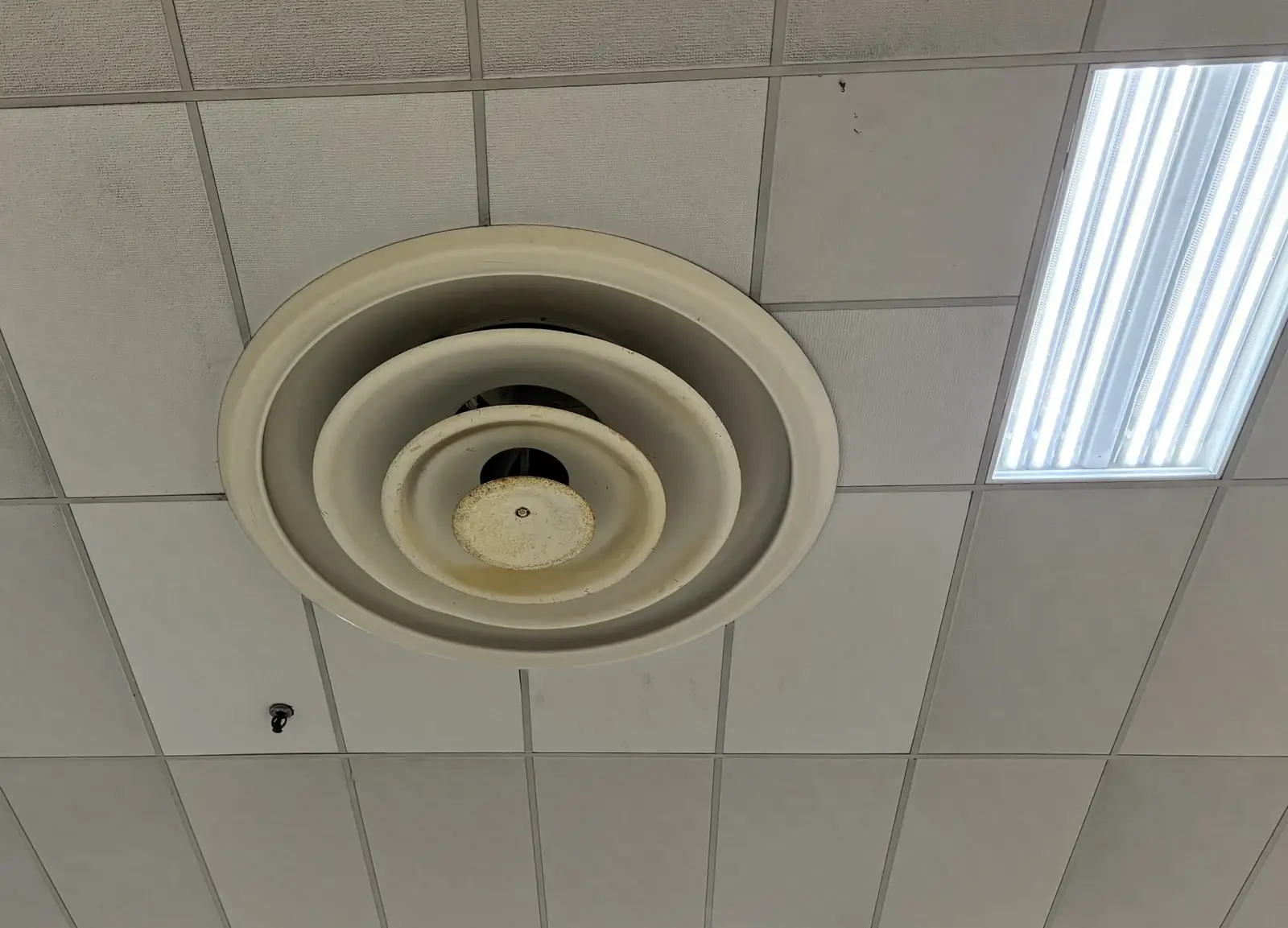
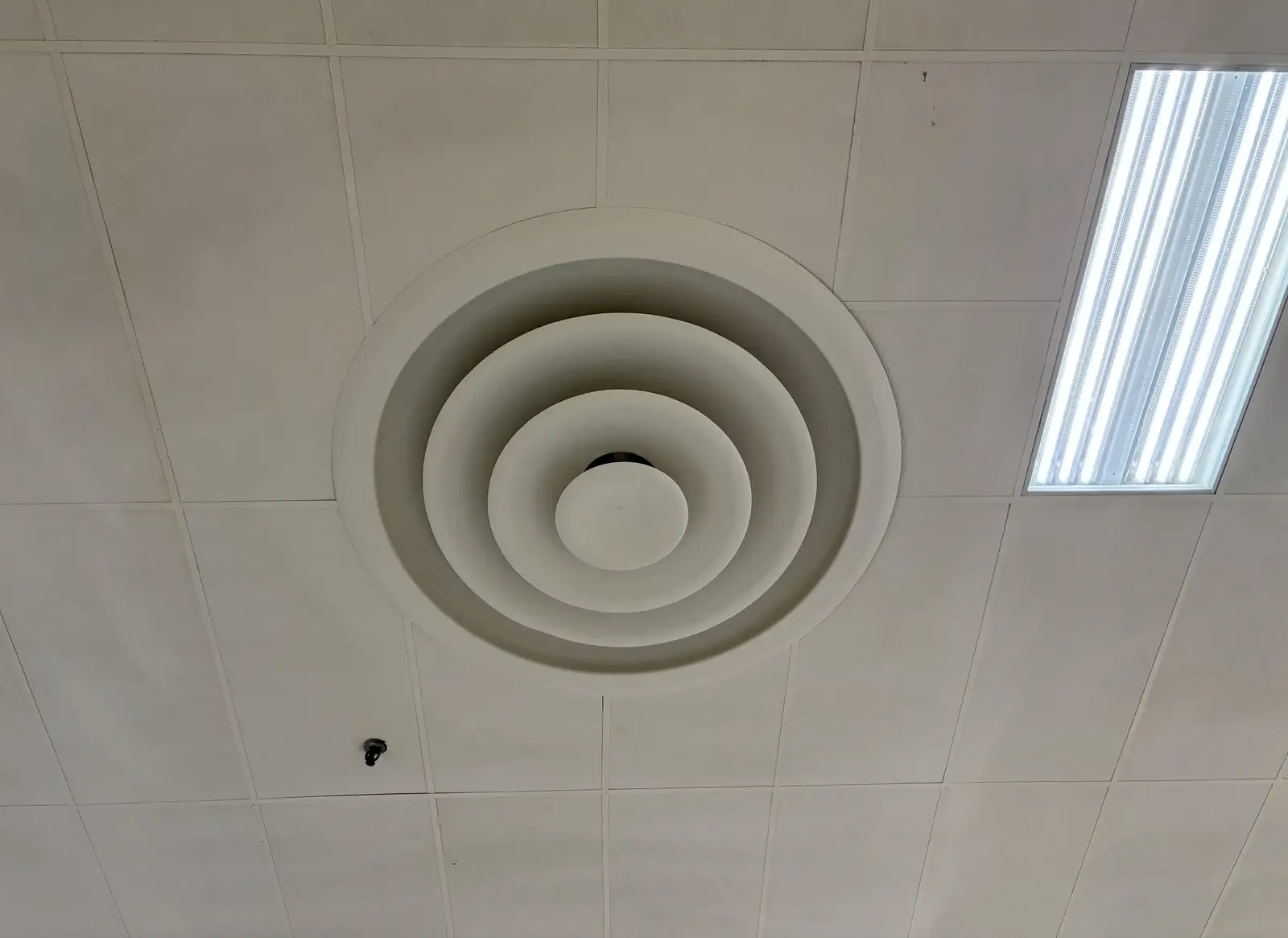
The grid and the air diffusers are coated at the same time as the tile. That is what stops a restored ceiling looking like new tiles dropped into an old frame.
Applied in place, overnight
Tile, grid and diffusers
Ceiling tile, the exposed t-bar grid and the air diffusers, coated as one surface so the ceiling has a uniform finish.
Airless spray, tiles in place
Nothing is torn out and there is no new tile to order, store or match to a pattern that is no longer made. Tiles that are not whole, dry and flat are replaced before coating.
Out of hours
A crew works after close and the space is open for business the next morning. Water-based and low odor, so there is nothing to ventilate first.
Restorable again later
A restored ceiling can be restored again. The second time costs about what the first time cost.
When it is not the answer
Where the tile is not a sound candidate for a coating, we will tell you that at the survey. Broken or warped tiles get replaced rather than coated.
A concourse that could not close
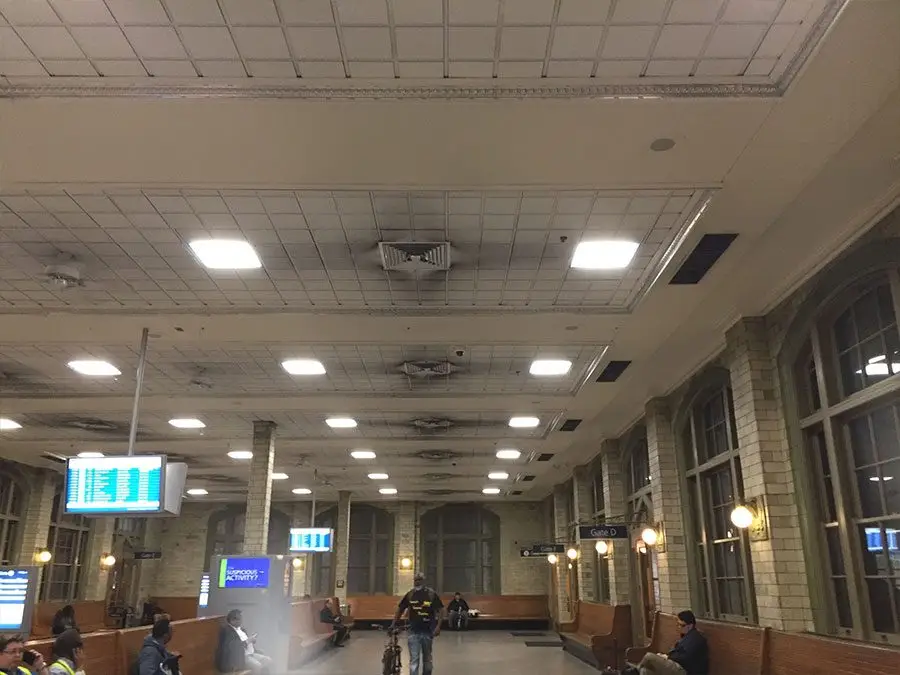
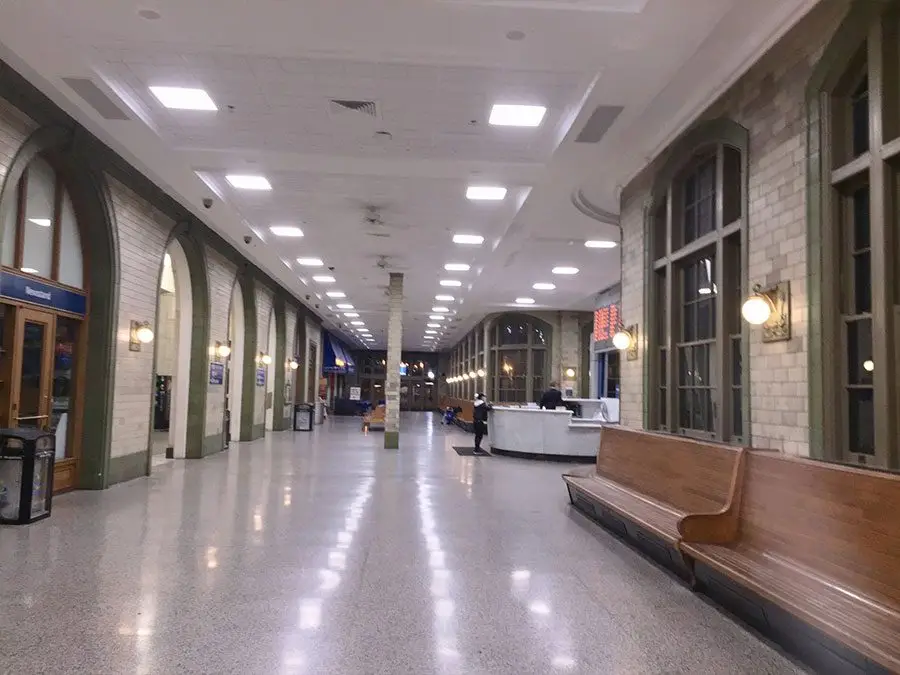
Coated overnight in a building that runs a service the next morning. No tile was taken out of the grid.
How did you replace all those ceiling tiles in less than a week?