Fiber-reinforced plastic walls, resurfaced rather than replaced
Fiber-reinforced plastic panels are on the walls of most food preparation areas, restrooms and receiving docks in the country, because they are durable and they wash down. What they do not do is stay clean and white.
Replacing the panels means taking them off a wall, dealing with the adhesive behind them and working around plumbing, outlets and equipment that was installed after the panels went up. In an operating building that is a bigger job than the ceiling.
ProWall resurfaces the panels where they are, in any color. It is normally run on the same program as the ceiling work, by the same crew, on the same nights, which is where most of the saving comes from.
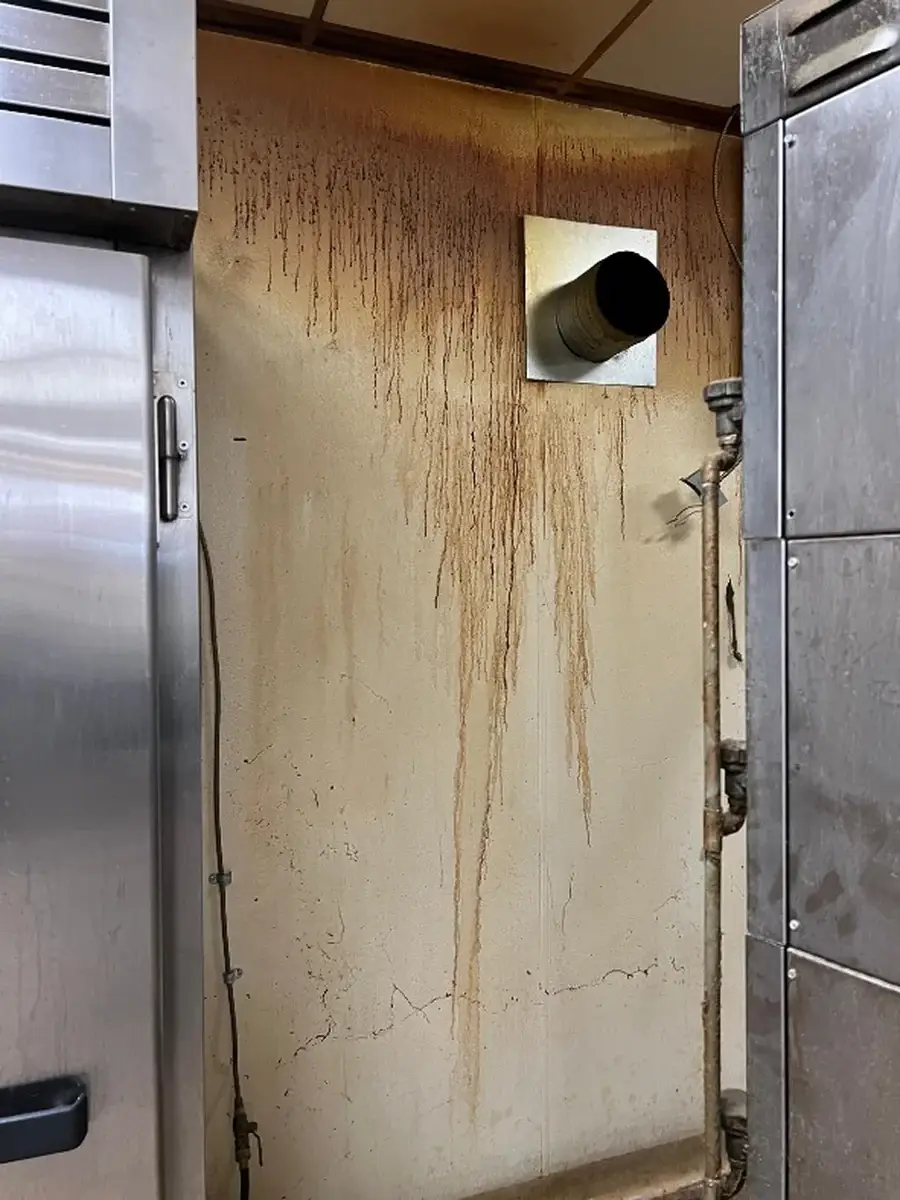
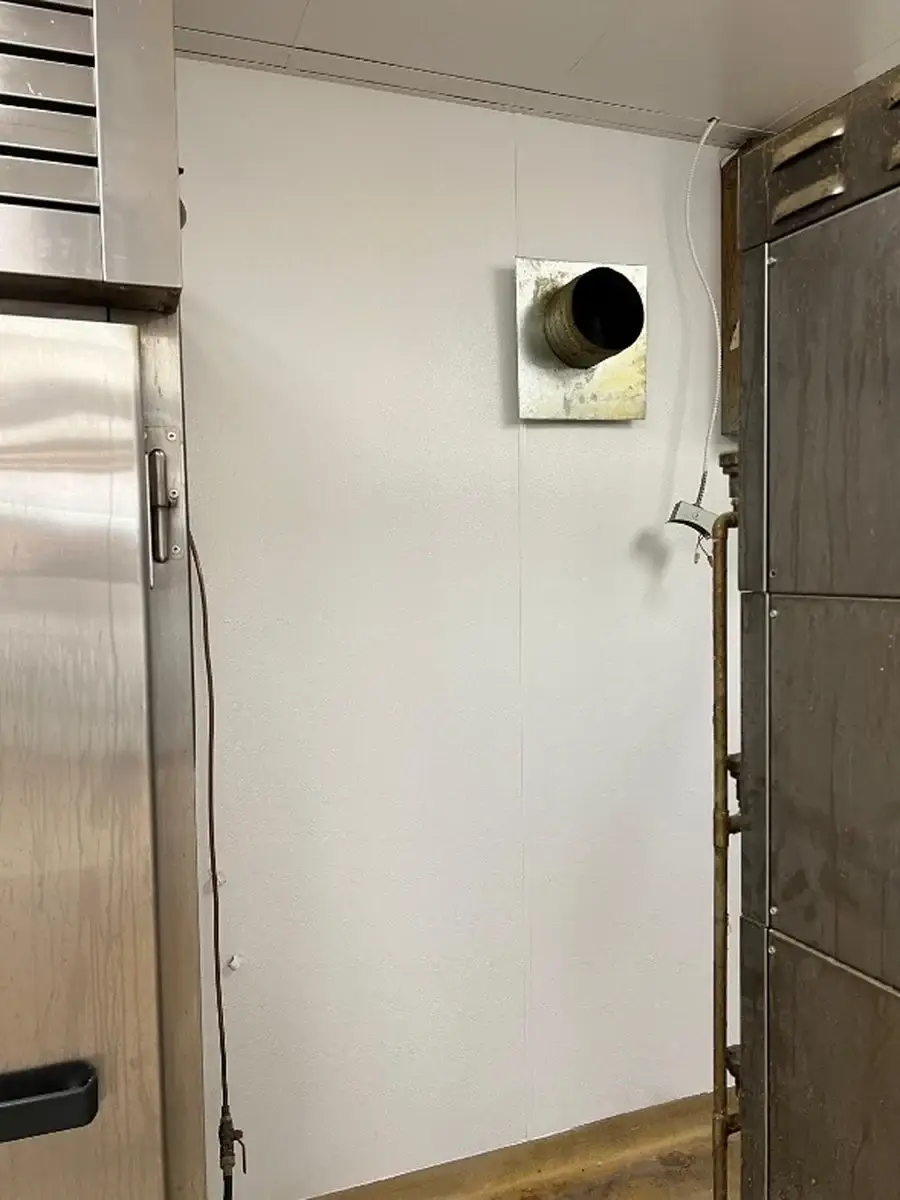
The same wall, coated where it stands. The duct, the conduit and the equipment either side were masked rather than removed.
Same walls, same fittings
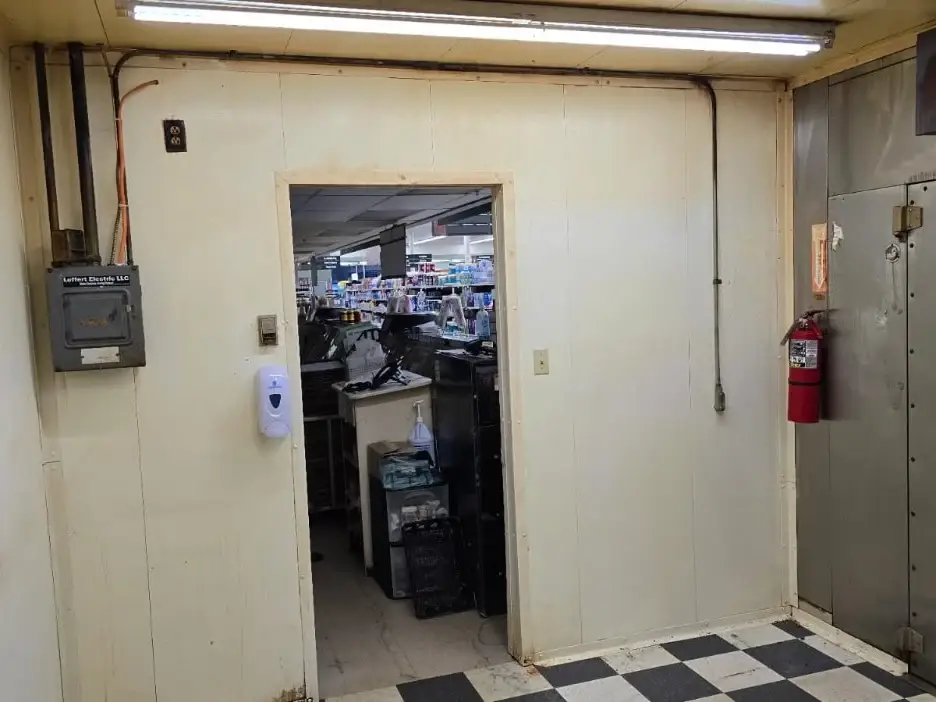
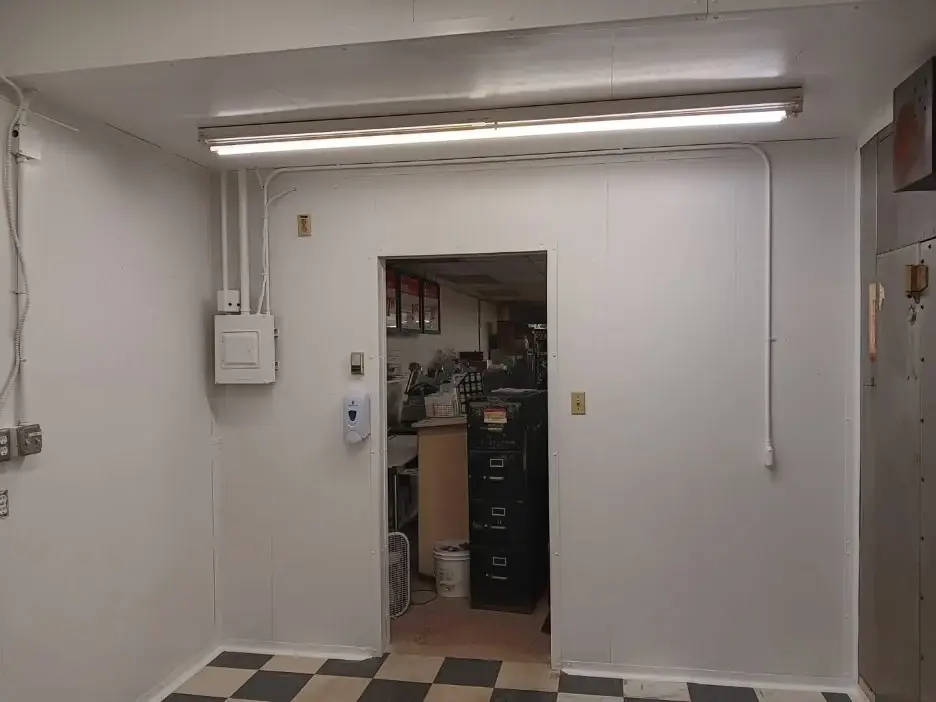
The panels stay on the wall. Plumbing, outlets and equipment are masked rather than removed, which is the difference between an overnight job and a shutdown.
Specification
| Substrates | Fiber-reinforced plastic wall panel, food preparation, restroom and receiving areas |
|---|---|
| Coverage | Up to 300 square feet per gallon |
| Color | Any color |
| Application | In place, no panel removal |
| Runs with | ProVinyl on the same program |
| Recoat | Yes |
Fire performance, volatile organic compound content, dry times and coverage under specific site conditions are on the current technical data sheet. Confirm every figure against that sheet before writing a specification.
Turnkey, or product only
Turnkey
ProCoat surveys the ceiling, writes the specification and manages the project, and ProCoat’s own crews do the work as ProCoat Contract Services.
Product only
Buy the material direct from ProCoat or through a distributor, including Sherwin-Williams, and apply it with your own crew. Technical support is included, and the material carries a one-year product warranty.
Documents
What ProWall is specified for
Food preparation walls
Deli, bakery, kitchen and prep rooms, where the wall is inspected as closely as the ceiling above it.
Restrooms
Public and staff restrooms in retail, education and transportation buildings, where the panel is sound but no longer looks it.
Receiving and back of house
Walls that take cart and pallet damage and get repainted badly rather than resurfaced.
Any color
Including a brand color, matched across a portfolio, rather than the single white the panel was supplied in.
On the ceiling program
Run with the ceiling work on the same nights by the same crew, so the mobilization is paid for once.
Without removing panels
No adhesive to deal with, no plumbing to disconnect and nothing to send to a landfill.
What it works alongside
A fiber-reinforced plastic wall, resurfaced where it stands
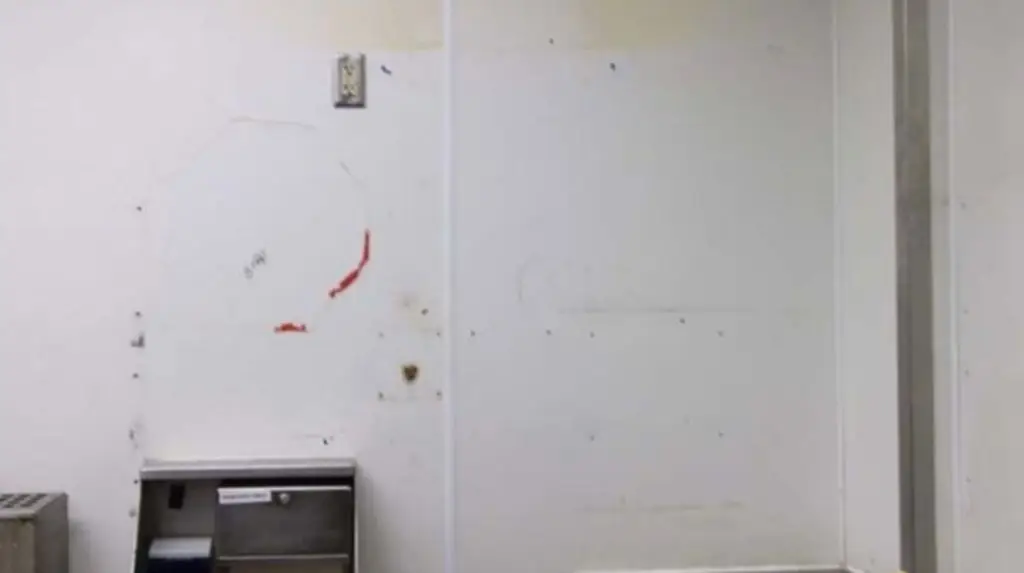
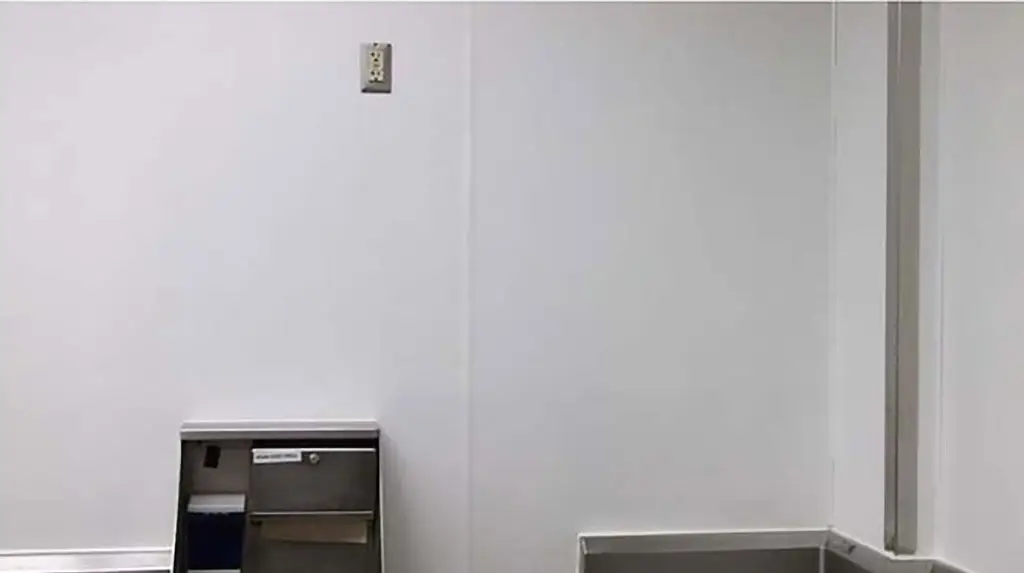
Fiber-reinforced plastic is expensive to take off and put back. ProWall treats the surface and leaves the panel alone.
The preparation is most of the job
A coating applied over a contaminated panel fails at the contaminant. Grease, nicotine and cooking residue bleed back through, and the wall looks worse in a year than it did before. The sequence below is why that does not happen.
| Area preparation | Signage and fixtures come off and are photographed first so they go back where they were. Ceiling, floor and remaining fixtures are masked |
|---|---|
| Chemical cleaning | ProCoat Hard Surface Cleaner, diluted and applied per the current technical data sheet |
| Priming, only where needed | If the panel is still yellow after cleaning it is primed, and nothing should be left yellowing or bleeding through before coating starts |
| Coating | Airless spray, enough pressure to hold a fan. Three hours to recoat, one hour to touch, then the masking comes off. A second coat where coverage needs it |
This is why the cleaners are preparation rather than aftercare. Which cleaner is used depends on what is on the wall, and on most jobs the cleaning decides whether the finish holds.