The biggest surface in your building, and the one nobody budgets for
Every building you look after has stained tiles, dirty air diffusers and a grid that has gone gray at the edges. None of it is broken, so none of it reaches a capital plan. It sits there making a clean building look older than it is, and the only quote anyone ever brings you is to rip the ceiling out.
There is a middle option, and it starts a lot smaller than a project.
Three things age a ceiling, and only one of them is the tile
Water stains
A roof detail, a condensate line, a sprinkler test. One brown ring on an otherwise sound tile, and the usual answer is to pull the tile and hope the replacement matches. It rarely does.
The things around the tile
Air diffusers, speaker plates, return grilles and the grid itself. Replace tiles and leave these alone and the ceiling still reads as old, because the eye goes to the dirty metal.
General discoloration
Cooking vapor, nicotine in older buildings, dust pulled across the plane by the air handling. It happens evenly, which is why nobody notices until a new tile goes in beside it.
A ceiling that is flat, whole and dry is a candidate for restoration. A ceiling that is sagging, broken or wet is not, and we will tell you that rather than sell you material for it.
ProCoat Acoustical Tile Restorer (ATR)™
The stain you can see from your desk. This is the smallest thing ProCoat makes and the one most facilities teams meet first. It is a one-step product, primer and top coat together, for water stains, fingerprints, soot spots and dirt smudges on tiles that are otherwise fine.
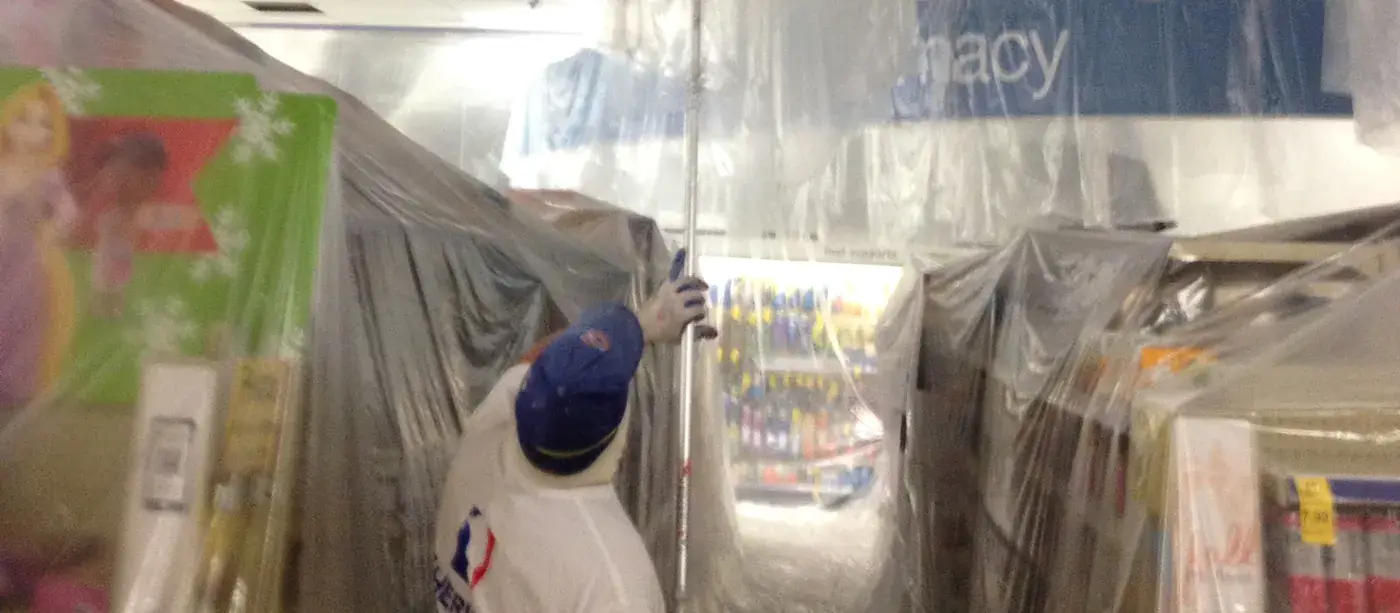
It sprays from the ground on an extension pole. No ladder, no scaffold, no closing off the area, no tile coming down and going into a dumpster. A maintenance technician can deal with a stain on a Tuesday morning without it becoming a job.
It comes in two colors, one matched to ProCoustic and one for standard white tile, because ceiling tile is rarely the white people assume it is.
One step
Primer and top coat in the same product, so a stain is dealt with in one visit rather than two.
From the ground
Extension pole application. The area stays open and in use while it is done.
Keeps the tile
The tile stays in the grid and out of landfills, and the ceiling keeps the acoustic rating it was specified with.
Confirm dilution, coverage and handling against the current technical and safety data sheets before writing a work plan.
Restoring the whole plane, without closing the building
There is a point where touching up individual tiles is losing to the rate of new marks. At that point the choice is usually presented as replace the tile and paint the grid, or live with it. Restoration is the third option, and it is the one that keeps the ceiling you already own.
| What gets coated | Tile, suspension grid, air diffusers, speaker plates and return grilles, all in the same pass, so the whole plane matches |
|---|---|
| How | Airless spray, in place. Tiles are not removed |
| Preparation | Contaminants are cleaned off first, with the cleaner matched to the contaminant, so that nothing bleeds back through the finish |
| Disruption | Typically worked overnight. Back in service the next morning |
| Base | Water-based, low odor, no solvent |
| Color | Standard white or custom tint, recorded for future touch-up |
The tile still lifts out
ProCoustic is non-bridging, so it does not glue the tile to the grid. The first time your contractor needs to reach a damper, a valve or a cable above the ceiling, that matters more than how it looks.
Class A, retained
Tested to ASTM E84, flame spread falls from 25 to 0 and smoke developed from 10 to 5. Tested to ASTM C423, the noise reduction coefficient moves from 0.55 to 0.60.
It gets brighter
Light reflectance of 0.902 after coating, against 0.80 for a brand new white tile. The same light fittings put more usable light into the space.
It can be done again
The same tile can be recoated again and again, so the decision you make now does not close off the next one.
The diffuser is part of the ceiling
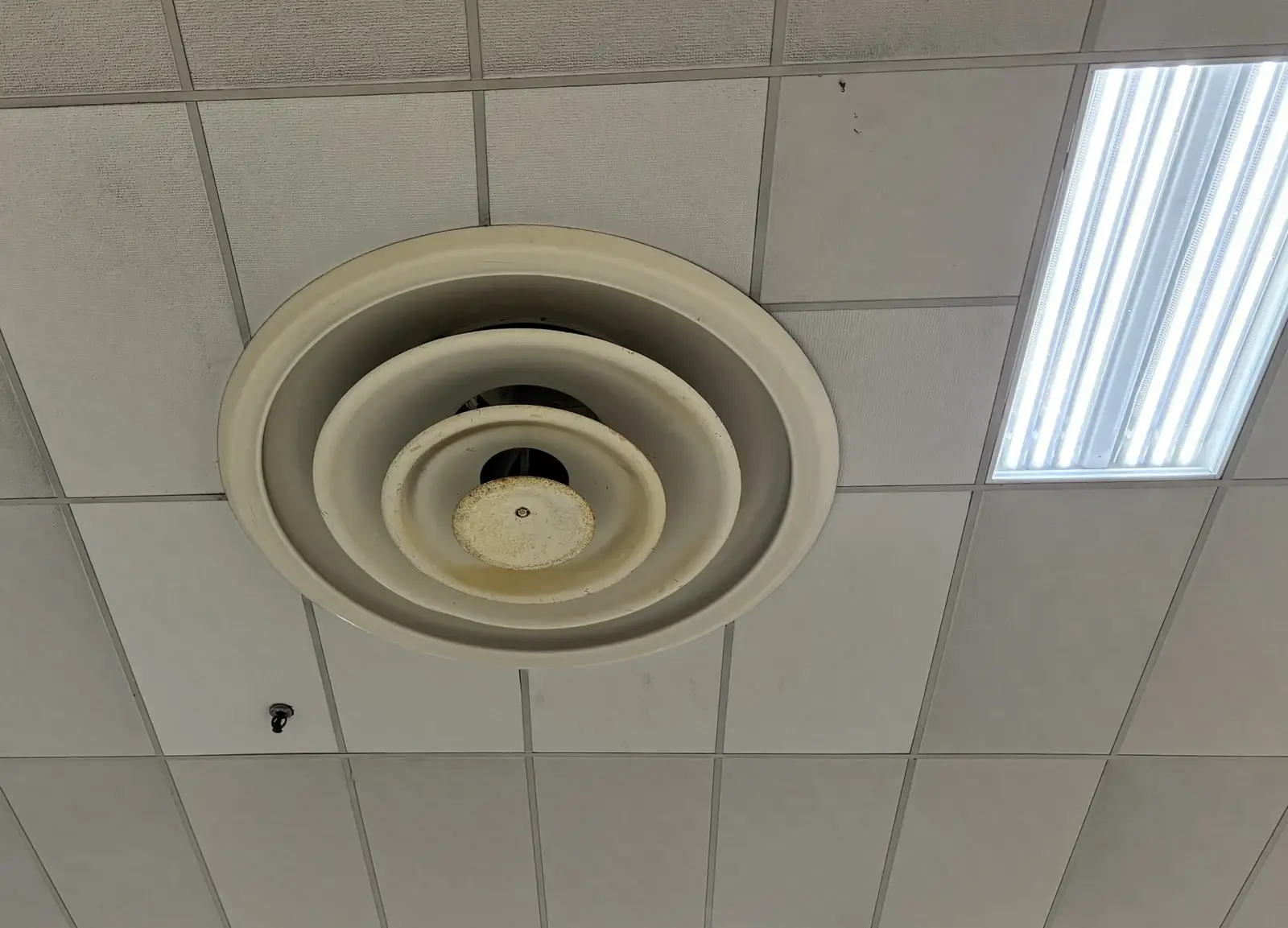
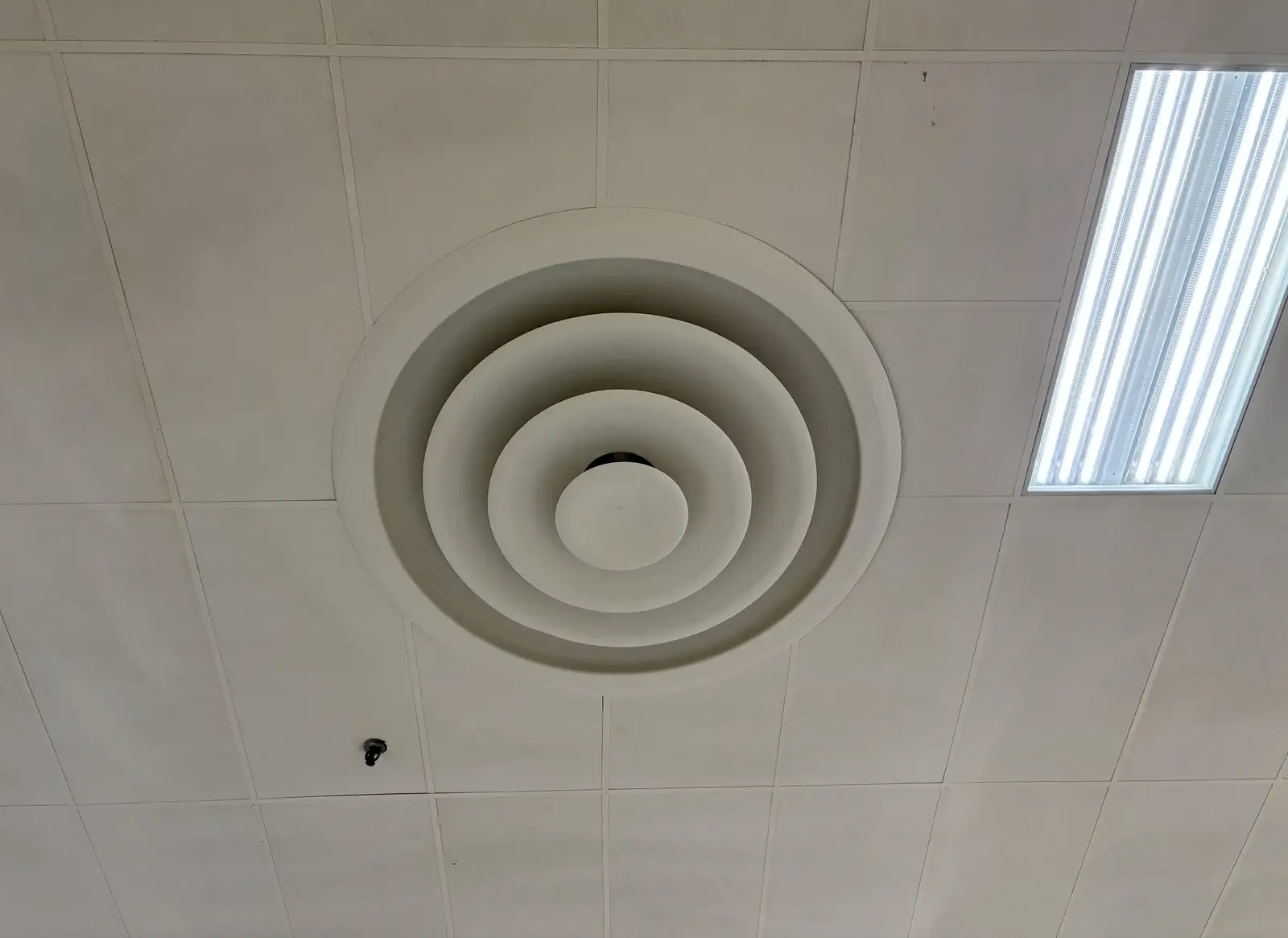
The tile, the suspension grid and the air diffusers are coated in the same pass. A ceiling where only the tile has been treated still reads as old from across the room.
Two things worth raising with your finance team
It is generally half the cost of replacing
Against pulling the tile and painting the grid, restoration generally runs about half, and the finish is warranted for fifteen years of color retention on work ProCoat installs. Ask us to model it against the actual square footage and the replacement quote you already hold.
It may not be a maintenance expense at all
Because the work extends useful life, keeps the Class A flame spread rating and the acoustics, and improves light reflectance, there is an argument that it is a capital improvement rather than a repair. ProCoat has a written summary of that argument that your finance team can review. Ask for it by name.
That summary is a starting point for your own finance and tax people rather than advice. The decision is theirs.
What to do next
Send photographs
Phone pictures of the worst area are enough to tell you whether you are looking at touch-up, restoration or replacement. We would rather tell you a ceiling needs replacing than sell you material for one that does.
Ask for a demonstration
A section of your own ceiling, coated, so the decision is made on your building rather than on somebody else’s photographs.
Order touch-up material
If the answer is stains rather than a program, the touch-up material ships direct and your own team applies it.
What a facilities team uses
The cleaners are preparation rather than aftercare. They pretreat contaminants so those contaminants do not bleed back through a coating applied over them, and which one is needed depends on what is on the surface.