The hardest version of the scheduling problem, because the building never closes
A station does not close. A terminal has a first train and a last train and very little space between them, and the ceiling is over the heads of the traveling public the whole time.
The answer is zoned, shift-based work. A section is enclosed, restored and handed back, and the crew moves on. Because there is no demolition and no material coming in or going out, a zone can be small and the handback can be quick.
A public transportation building is the worst possible place to run a demolition. Restoration removes the dumpster, the stacked tile, the lead time on a discontinued pattern, and the long enclosure that goes with all three.
Zone, restore, hand back
Enclosures are sized to the shift rather than the project, so the public sees a small barrier that moves rather than a large one that stays.
Class A, documented
Surface burning characteristics matter more in a public assembly building than almost anywhere else. The ceiling keeps its Class A rating and the test documentation goes into your file.
Nothing to ventilate
Water-based and low odor, in a building where there is no realistic way to close a concourse and air it out.
Five weeks, two shifts a day, finished before the return
Over the heads of the traveling public
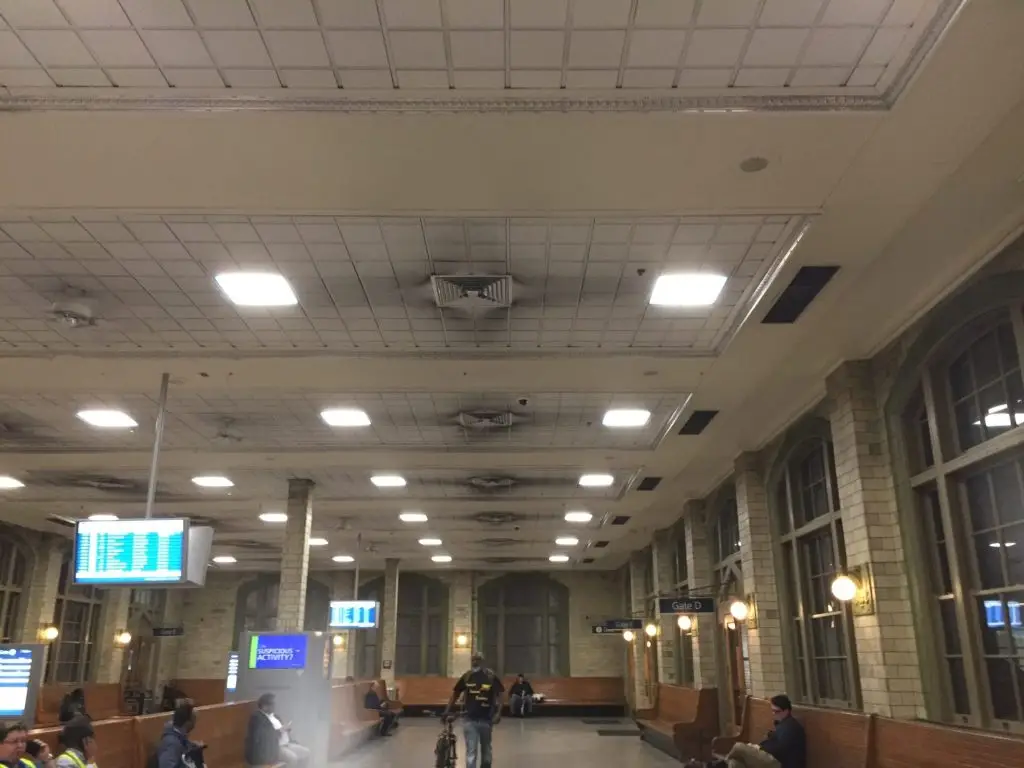
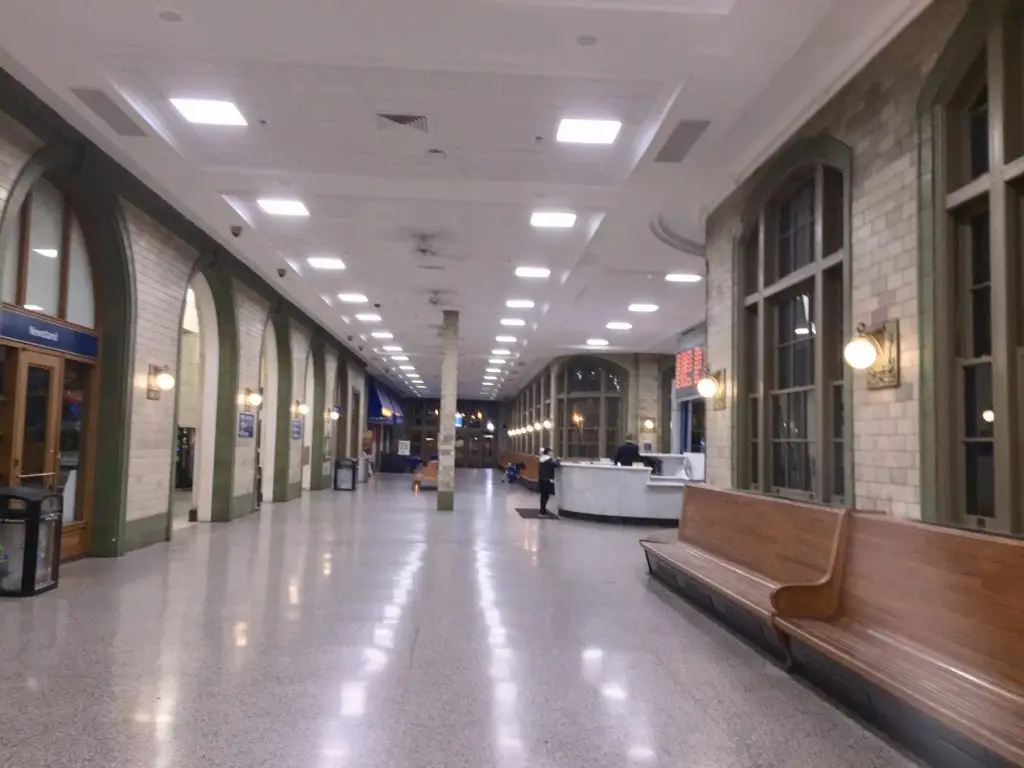
Grid and air diffusers are coated with the tile, so a restored zone matches the one next to it instead of drawing attention to the join.
What transportation facilities teams ask first
Can you work around live operations?
That is the normal case rather than the exception. Work is zoned and run on shifts that fit between the last service and the first, with each zone handed back before the building fills.
What about the height?
Concourse and terminal ceilings are worked from lifts, which is one of the reasons restoration beats replacement here. Coating a high ceiling is a spray operation. Replacing one is a materials handling operation.
What does the public see?
A small enclosure that moves, rather than a large one that stays. Because no material comes in or goes out, a zone can be sized to the shift.
What if we need a zone back early?
Zones are sized so that a handback is a decision rather than a negotiation. There is no demolition to make safe and nothing to remove before the area reopens.
Do you work to our contractor safety requirements?
ProCoat crews work to site orientations, permits and access protocols as your operation requires, with a named supervisor on every shift.
What happens to the Class A flame spread rating?
ProCoustic keeps the ceiling’s Class A rating. In independent ASTM E84 testing, flame spread dropped from 25 to 0 and smoke developed from 10 to 5. That matters more here than almost anywhere, and the documentation goes into your file.
What we use in stations and terminals
Transportation work
Four hundred thousand square feet in five weeks
A headquarters building restored on a fixed date, which led to ceiling work in Amtrak stations in other states.
When the answer is not a coating
Across forty-five surveyed sites, coating was recommended only on the most severe. The rest were not sound candidates. We would rather tell you that before you budget.